Why It Matters

Locksmith Is the 2 A.M. Phone Search That Decides Who Pays Your Mortgage

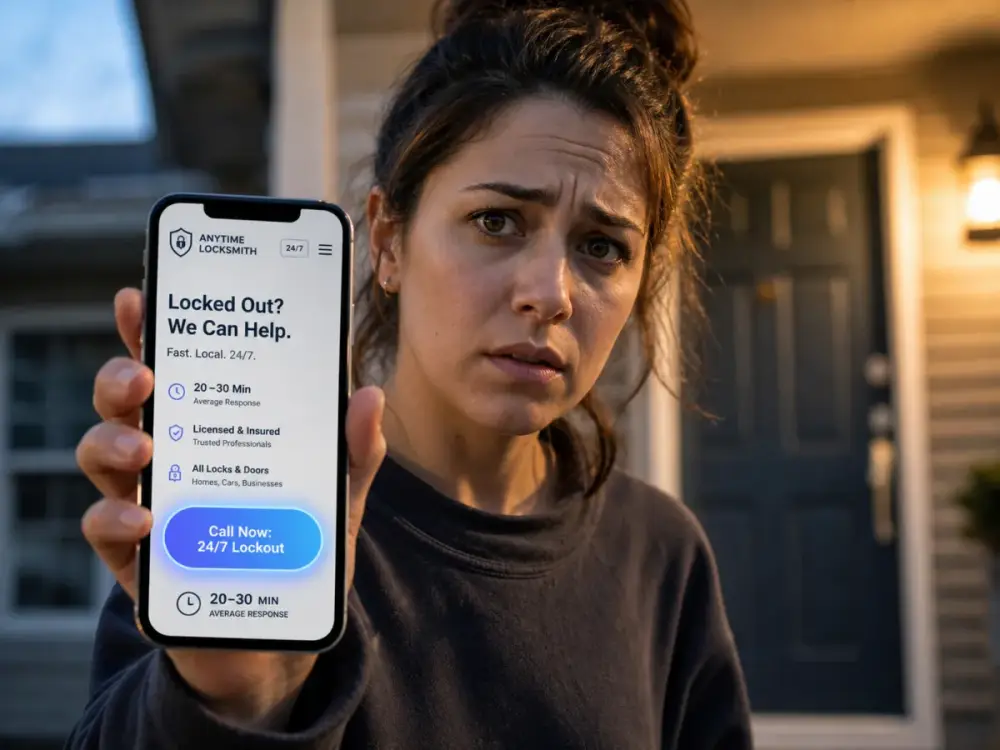
A homeowner locked out of their house at 2am. A driver locked out of their car in a grocery store parking lot. A business owner whose former employee still has keys. Every locksmith call starts with a panicked Google search from a mobile phone, and ends with whichever locksmith’s site loaded fast enough to get the click. Locksmithing is the most extreme example of mobile-first urgency in the trades — even more so than plumbing or towing, because the customer is often standing in the rain with no shelter.

Locksmith search has historically been one of the noisiest categories on Google. National lead aggregators with questionable local presence have shown up in locksmith results for years. Google has cracked down significantly, but real local locksmiths who don’t have proper LocalBusiness schema, verified GBP listings, and a genuine local website still struggle to rank above the noise. Your website is what proves you’re a legitimate local locksmith with a real local presence.

And then there’s the high-margin commercial side: master-key systems, access control, panic bars, and code compliance work for offices, retail, schools, and government. These contracts run $5,000-$50,000+ and are almost exclusively awarded based on website-vetted credentials. Without a real site, you stay stuck doing $75 rekey jobs forever.

What Happens When Your Locksmith Business Has No Real Website

  • You lose every after-hours lockout. Customers locked out at midnight call whoever loads first. A missing or slow site = a competitor’s service call.
  • You lose to the lead aggregators. National lead aggregators still rank in locksmith results in many metros. Without proper LocalBusiness verification and a real website, it’s much harder to compete with them in search.
  • Customers can’t verify you’re actually local. Locksmith customers are wary of anonymous listings and want to confirm a real local address and a real license before they call. A website with verified local NAP and license info is the trust signal that gets the call.
  • Commercial contracts go elsewhere. Property managers, schools, government, and corporate accounts need to see your credentials, insurance, prior commercial work, and code-compliance experience. Facebook doesn’t communicate any of that.
  • Automotive locksmithing market closes off. Dealerships and tow operators refer automotive customers to locksmiths who handle programming, keyless, and transponder work. Without a dedicated automotive page, you don’t exist in those referrals.

What Customers Actually Want to See on a Locksmith Website

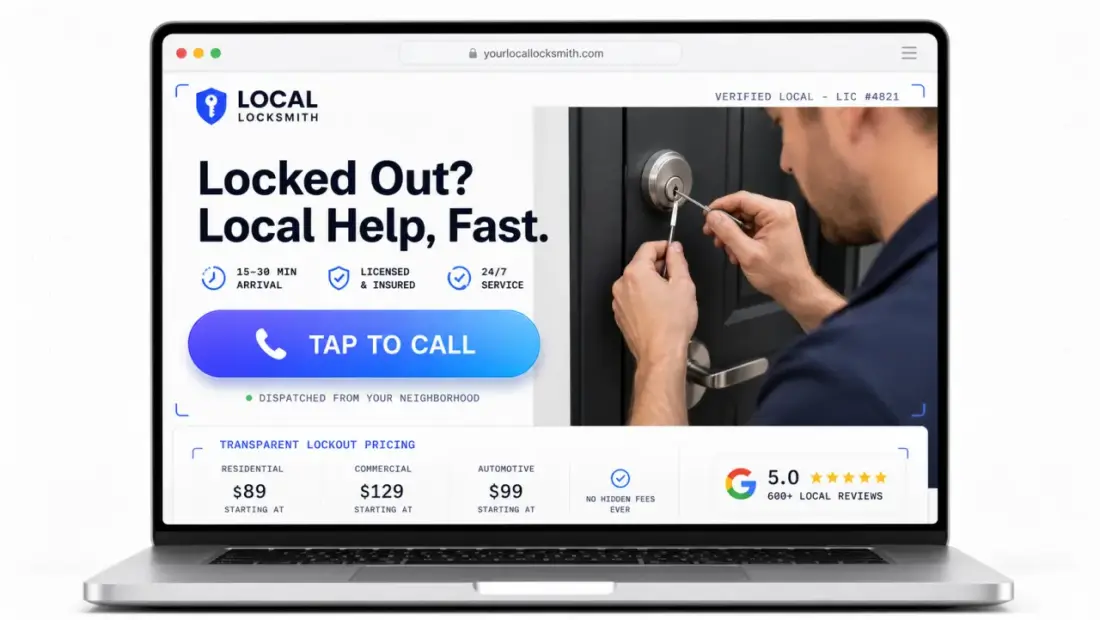
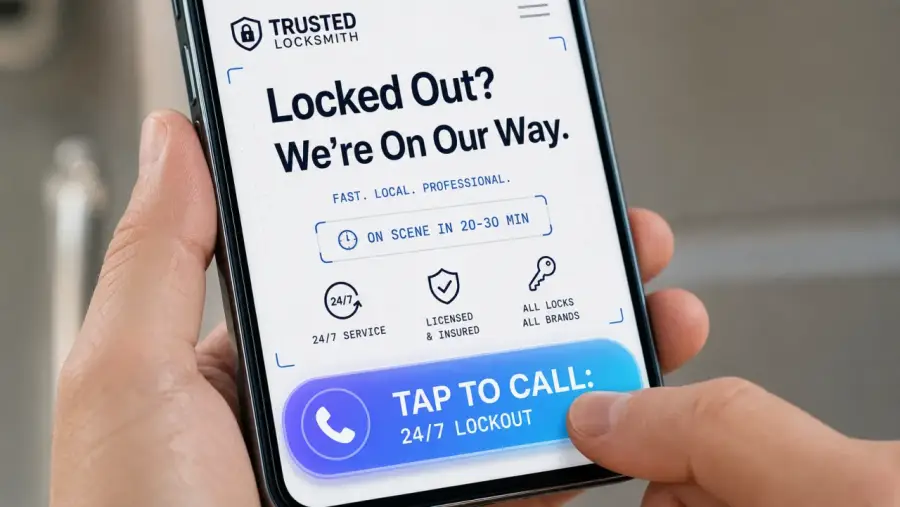
Massive Click-to-Call Phone Number

In the header, in the hero, sticky on mobile scroll. 24/7 availability promise displayed prominently. The single most-clicked element. Lockout customers do not fill out forms; they call.

License Number, Insurance, Local Address

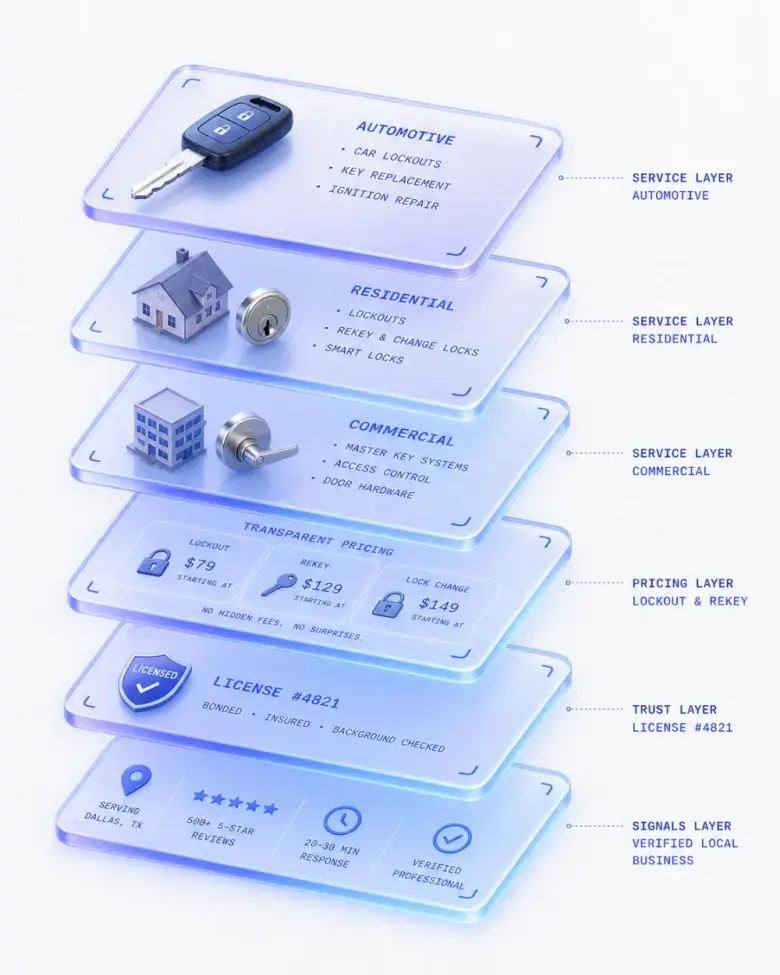
State locksmith license, business address (not a virtual mailbox), insurance amount, and years in business. These are the trust signals that distinguish established local locksmiths from anonymous lead aggregators. Required visible on every page.

Service Pages by Job Type

Emergency lockout (residential and automotive), rekeying, key duplication, smart lock installation, master key systems, commercial lock change, automotive key programming, transponder keys, lock repair, push button locks, panic bars. Each gets its own page.

Transparent Pricing or Ranges

“Residential lockout: $X-$Y” “Rekey: $X per cylinder”. Published pricing is the biggest trust signal you can show locksmith customers, who are wary of opaque pricing and tend to check prices first.

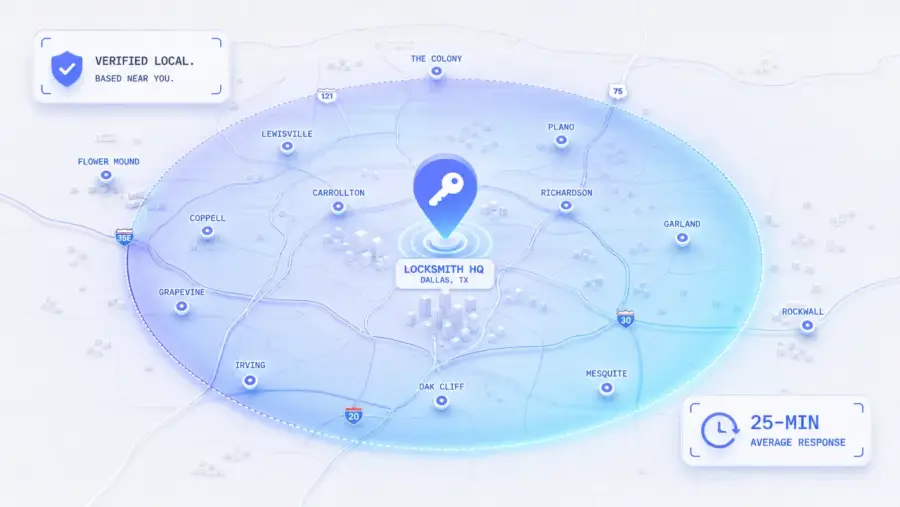
Service-Area Map

Visual map of your dispatch radius. Customers want to confirm you cover their location. Saves dispatch time on out-of-area calls.

Response Time Promise

“On scene in 20-30 minutes for lockouts within X miles.” Most effective conversion copy on a locksmith site. Customers want to know how fast you’ll arrive.

Service Pages That Help You Rank for Searches That Actually Convert

  • Locksmith near me [city] / emergency locksmith. Highest-volume urgency search. $75-$200 per call typically.
  • House lockout / residential lockout [city]. Specific search for home access. Premium pricing for after-hours.
  • Car lockout / automotive locksmith [city]. Different audience — often parking-lot situations. Insurance and tow-company referrals.
  • Rekey locks / lock rekeying [city]. Volume residential work. Post-move-in, post-breakup, post-renter-departure. $50-$200 per house.
  • Smart lock installation [city] / smart deadbolt install. Growing category. Premium pricing.
  • Car key replacement / transponder key programming [city]. Specialty automotive work. Premium tickets $150-$500+.
  • Push button lock / keypad lock installation. Specialty residential and commercial.
  • Commercial locksmith [city] / commercial lock change. Different audience — property managers, office buildings.
  • Master key systems [city]. Premium commercial work. $1,000-$10,000+.
  • Panic bar installation / push bar / code compliance. Specialty commercial work, often required by fire code.

Local SEO for Locksmiths: How We Set It Up

  • Locksmith + LocalBusiness schema with verified address. Google’s locksmith-category requirements heavily favor verified local addresses. This is what helps a real local locksmith compete with national lead aggregators.
  • Service-specific title tags. “Emergency Locksmith in [City] — 24/7” instead of generic “Services.”
  • NAP consistency. Identical across the site, GBP (verified by mail), Yelp, BBB, and locksmith-trade directories (ALOA member listings).
  • State license verification. Where applicable, license info displayed prominently. Google rewards verified credentials.
  • Service-area pages. One per town/zip with real local detail (neighborhoods served, common lockout situations in that area).
  • Speed and mobile readiness. Optimized for fast mobile load. Locksmith customers are mobile-first by necessity.
  • Click-to-call tracking. Every phone link tracked.

What a New Locksmith Website Is Actually Worth

Here’s a simple illustration (not a prediction — your results depend on your market, reviews, pricing, and many factors outside the website). If the website brings in three extra calls per day at an average ticket of $125, that’s $11,250/month or $135,000/year. Add one master-key commercial contract a quarter at $5,000 and the math gets significantly better. Even modest results easily cover the $100 build and $25/month maintenance.

Why Most Web Designers Overcharge Locksmiths

Agency quotes for locksmith websites run $2,000 to $6,000 plus $50 to $200/month. Pricing reflects what locksmiths are used to paying.

We do it differently. $100 build, $25/month hosting and maintenance, month-to-month, no contract. Free homepage mockup first. Access-control dashboards, master-key planning tools, and dispatch integrations are quoted separately.

Frequently Asked Questions

How does the site compete against national lead aggregators?
A verified Google Business Profile, proper LocalBusiness schema with a verified local address, and consistent NAP across directories give Google clear signals that you’re a legitimate local locksmith with a real local presence. Google has tightened its requirements for the locksmith category over the last few years, which is part of why real local locksmiths with proper setup now compete better in locksmith search — though specific rankings always depend on competition, reviews, and other factors outside the website.
Should I publish lockout and rekey pricing on the site?
Published pricing is the biggest trust signal you can show locksmith customers. “Residential lockout: $75-$150” “Rekey: $25 per cylinder”. Customers wary of opaque pricing tend to check prices first.
How fast does the site need to load on mobile?
Under 2.5 seconds on mobile is the target. Locksmith customers are often outside, on weak signal, with low phone battery. We test against Core Web Vitals before launch and prioritize fast mobile load.
Will the site handle commercial locksmith work?
A separate commercial section with master-key, access control, panic bar, and code-compliance content. Commercial buyers want different proof points than residential lockout customers.
Can the site display my locksmith license?
License number displayed in the header, footer, and on every service page. Where state law requires license display in advertising, the site complies automatically.
How do you handle automotive locksmith services?
A dedicated automotive page covers transponder programming, key replacement by make/model, key fob services, and roadside lockouts. Brand recognition matters (Mercedes, BMW, Ford, Toyota all have different programming requirements).
How long until the new site produces leads?
Branded searches and Google Business Profile clicks can drive direct visits as soon as the site is live. Organic search rankings take time to build and depend on factors outside the website itself, including reviews, citations, and your Google Business Profile. SEO timelines are typically measured in months, not days, and we can’t promise specific rankings or traffic.

Get a Free Homepage Mockup

We’ll design a free homepage mockup for your locksmith business before you pay.

Get My Free Homepage Mockup See Pricing
$100
Starting build fee
$25
Monthly hosting & maintenance
1–2
Weeks to launch

Let’s Build Your Locksmith Website

Send the basics and we’ll be in touch with next steps for your free homepage mockup.

Tell Us About Your Business