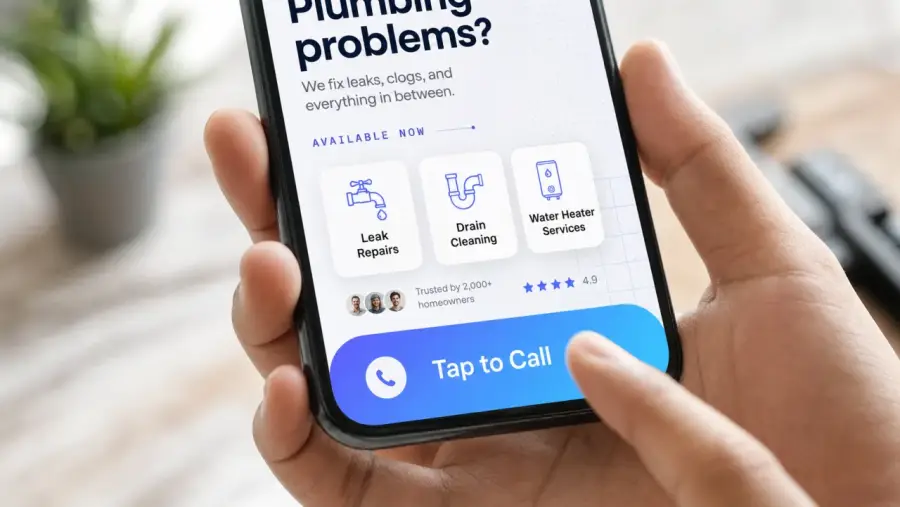
Tap-to-call
One tap and the phone rings
Your number sits in the header, the hero, and on a sticky bar that follows every mobile scroll. No copying, no squinting. The most important button on a plumbing site.
Websites that win local customers
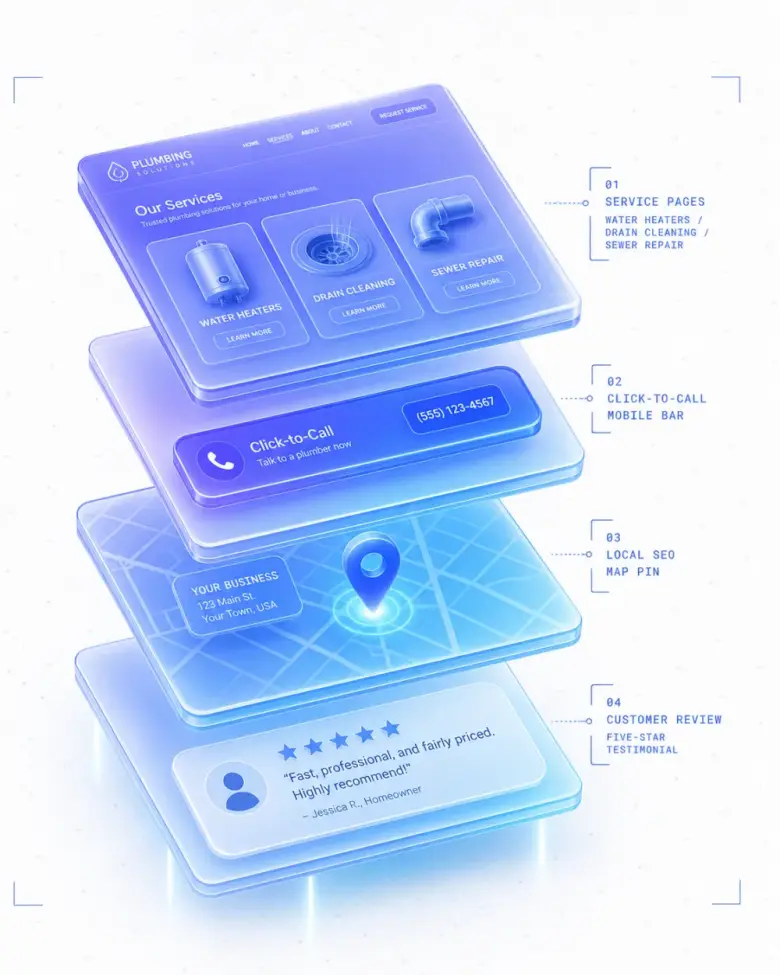
Plumbing is the most urgent-search trade there is: "emergency plumber near me," "water heater replacement," "drain cleaning" all convert in minutes when the customer is in trouble. We build plumbing websites that load fast on mobile, click-to-call from every screen, with dedicated service pages for water heaters, drain cleaning, sewer repair, repipes, and gas lines, plus a local-SEO foundation tuned to help you compete with the national franchises on the long-tail searches in your zip codes.
● From $250 · live in 1–2 weeks · no contracts · you own it
See a plumbing site we built →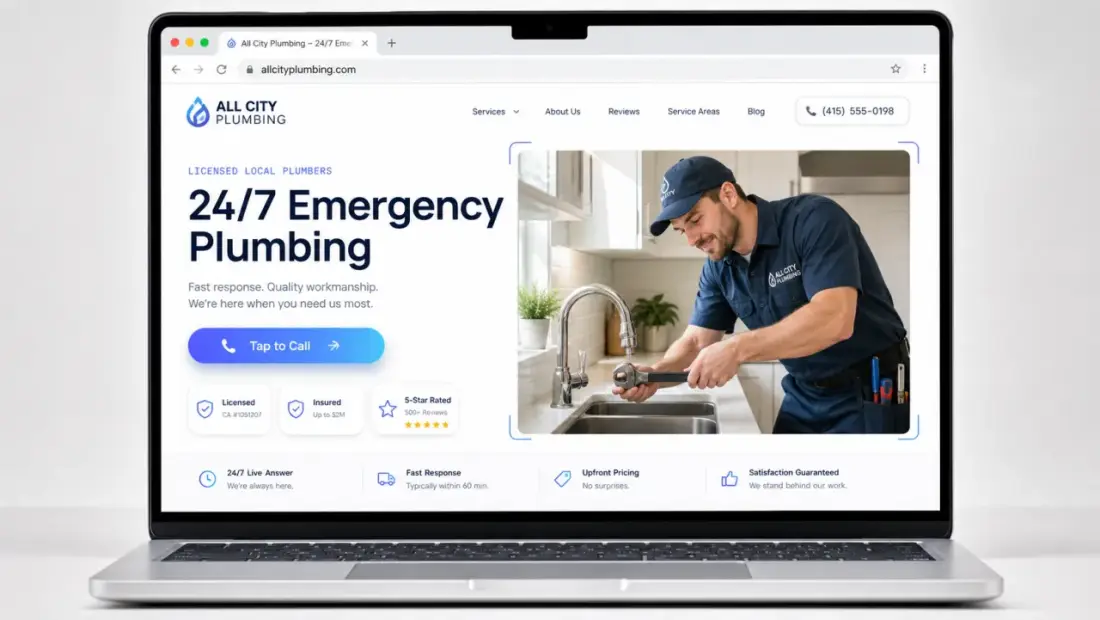
The search moment
When a water heater fails or a drain backs up, homeowners reach for their phone and search for a local plumber right then. A fast, clear website puts you in front of them at that exact moment, with a tap-to-call button, the services you offer, and proof that you’re licensed and trusted.
It earns the bigger work too. Tankless installs, sewer repairs, and repipes are researched before anyone calls. A clean, quick site is what makes them pick you over a faceless franchise.
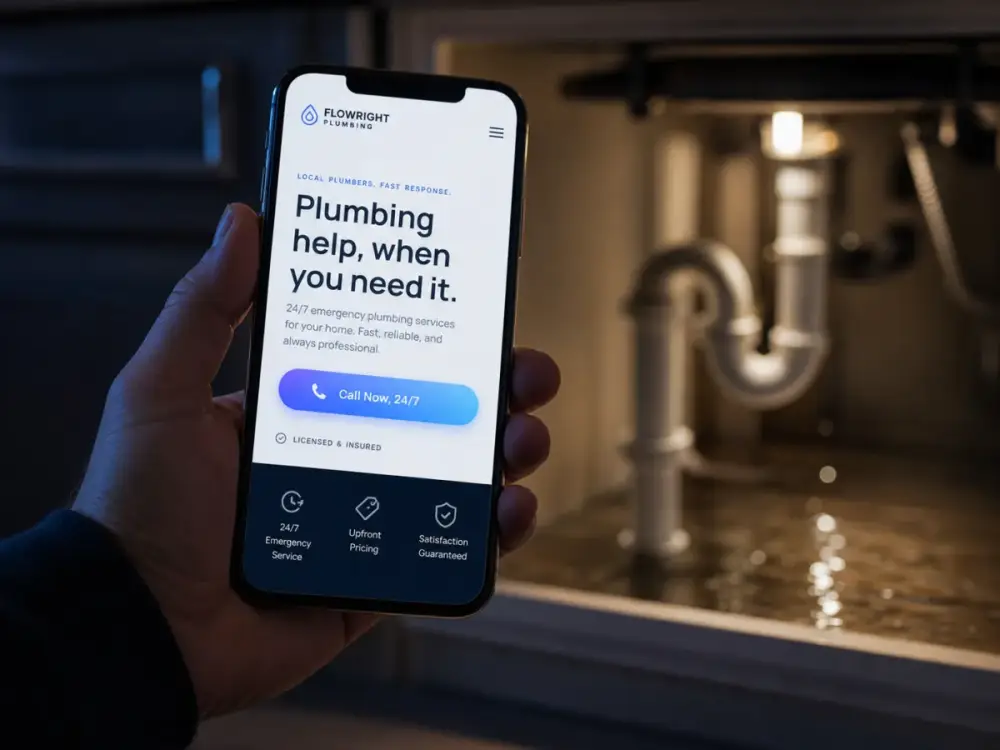
Leak → Search → Tap-to-call · the whole decision takes minutes
What we build in
Not decoration. The pieces that turn a searching homeowner into a booked call, built into every plumbing website we ship.
Your number sits in the header, the hero, and on a sticky bar that follows every mobile scroll. No copying, no squinting. The most important button on a plumbing site.
Matches the highest-intent searches: what counts as an emergency, your dispatch window, after-hours rates, and how to shut the water off until you arrive.
Water heaters, drain cleaning, sewer repair, repipes, leak detection, gas lines, sump pumps: each can be built around the exact service a customer searches for, with room for more as your site grows.
“Drain cleaning starts at $X.” “Most water-heater installs run $X–$Y.” Clear ranges bring you customers who call ready to book.
Your license number, insurance, and Google rating shown where a customer can’t miss them. Trust is what turns a click into a call.
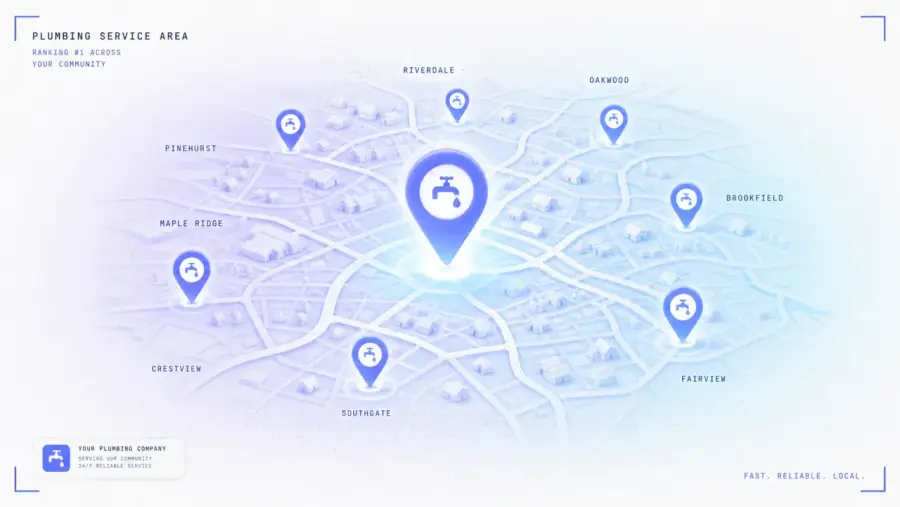
A page per town, suburb, or zip you serve, structured so Google connects you to “plumber in [town]” searches from customers who want a local company.
Built around real searches
Plumbing searches split sharply by job. We give each one its own page, so you show up for the searches that actually turn into work.
The 24/7 “plumber near me right now” searches, ready to tap-to-call.
Tank and tankless: a high-value job people research before they buy.
Bread-and-butter work that often opens the door to bigger repairs.
High-stakes, high-ticket searches from customers close to hiring.
Urgent, specific searches that convert when you’re easy to reach.
Whole-house repipes: a considered purchase your site can win.
A licensed specialty worth its own trust-building page.
Seasonal, weather-driven demand you can be ready to capture.
Faucets, toilets, garbage disposals: the everyday jobs that build repeat customers.
What’s built in
Plenty of websites look fine and still don’t work. Every plumbing site we build ships on the same engineered foundation. Here’s the standard spec, in plain English.
Fast-loading pages keep visitors engaged and make a strong first impression.
A flawless experience on phones and tablets, where most customers will find you.
Optimized so search engines understand your site and can connect you with local customers.
Organized around your services and service area, helping nearby customers find you.
Clear navigation so visitors instantly find your services, pricing, and contact details.
A polished, professional design that builds instant trust and credibility.
Designed to guide visitors toward calling you or requesting a quote.
Standard on every build, from the $250 starter to the largest package
How it works
Five calm steps. You hold the green light the whole way.
Tell us about your plumbing business: your services, your town, and what you need. No commitment.
FreeLove the direction? Give us the green light. Want changes? We revise first.
Your callWe build the full website: fast, mobile-first, and search-ready.
7–14 daysWalk through the finished site with us; we fine-tune the details together.
IncludedWe take it live, then keep it updated and running smoothly.
Status ● livePricing
One-time build. Pick the size that fits your plumbing business, from a simple starter site to a larger multi-page build. Every size sits on the same fast, SEO-ready foundation, so you can start small and add pages as you grow.
Every plan includes on-page SEO, mobile-first design and click-to-call. Hosting & care is optional at $25–$60/mo. Cancel anytime, and you own the site either way.
Questions
Instantly. Your number sits in the header, in the hero, and on a sticky mobile bar that follows the customer as they scroll. One tap to call, no copying or squinting. For plumbing, where water is often actively running, that tap-to-call is the single most important element on the site.
Yes. You get a dedicated page for each service you prioritize, with room for more as your site grows. Water heaters, drain cleaning, sewer repair, repipes, leak detection, gas lines, and more can each be built around the exact phrase a customer searches, so Google understands the range of what you do.
That’s the goal. Tankless installs, sewer replacements, and whole-house repipes are researched carefully. Clear service pages, visible reviews, and fast mobile load give those customers the confidence to choose you over a national franchise.
Front and center. Your license number, insurance, and Google review rating are placed where a customer can’t miss them. Trust is what turns a late-night click into a booked call.
With location pages for the towns, suburbs, and zips you cover when your plan has room, proper LocalBusiness schema, and a fast, mobile-first structure. These are the signals Google uses to connect you with nearby customers who are ready to call.
Builds start at $250, and you pick the number of pages that fits, from a simple starter site to a larger multi-page build. Every plan includes on-page SEO. Optional hosting and care runs $25–$60/month, and you own the site either way.
Why us
Plumbing is a right-now business. We build the site that gets found the moment a pipe bursts, then hand you the keys.
Get started
Your next customer is searching this week. Tell us about your plumbing business and the town you serve, and we’ll take it from there.
Tell us about your business and the plan you’re interested in. We’ll reply within one business day with next steps. No payment is taken now.
You’ll see the design direction early, before you commit. No payment is taken now.