A lot of small-business owners look at their busy social media page — followers, photos, posts, reviews — and decide it’s enough. Why pay for a website when the social platform is free and customers are already there? The answer is that a social page is a tenant in someone else’s building. A website is a building you own. The difference doesn’t matter on a good day, but it matters enormously every other day.

The platform controls everything about your “page”

Your reach, your visibility, your features, your URL — the platform decides all of it, and the rules change without notice. Industry-wide, organic reach for business pages on the major social networks has dropped dramatically over the years. A page that reached half its followers a decade ago reaches a small fraction of that today. Posts you spent time writing tend to get shown to relatively few people unless you pay to boost them.

You don’t set the algorithm. You don’t set the design. You don’t even fully control your followers — the platform does, and accounts can be restricted or removed over policy issues real or perceived, often with limited recourse.

Google barely sees social-network pages

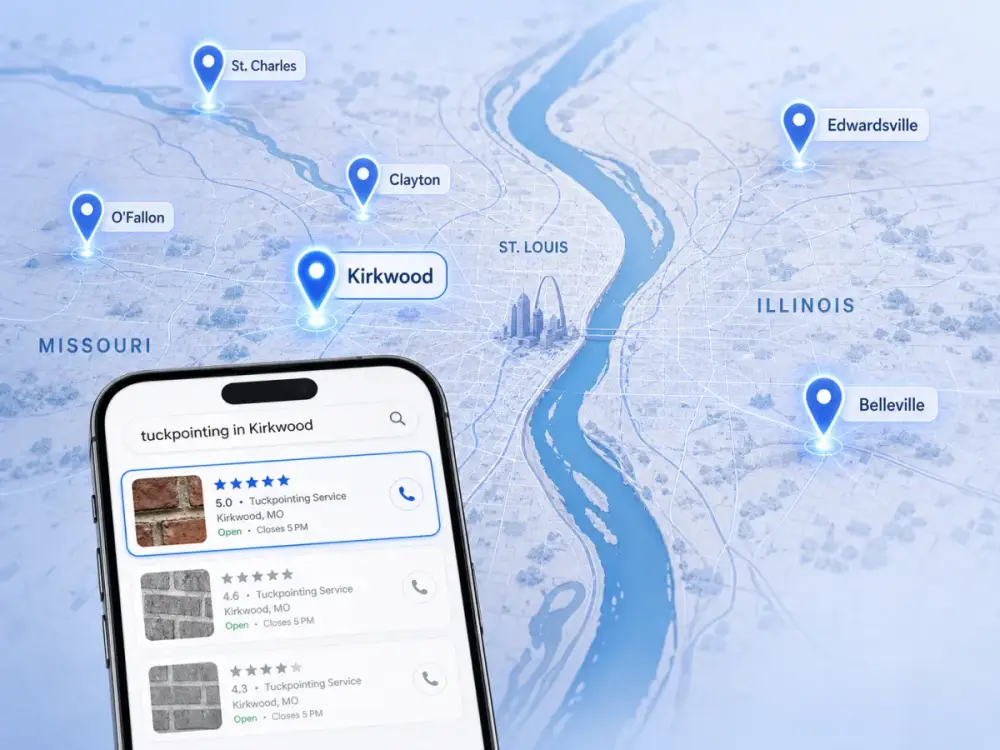
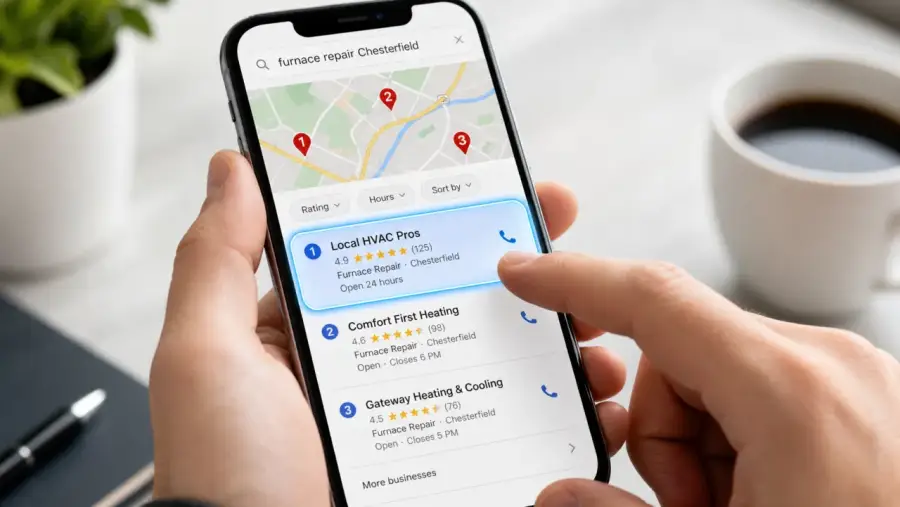
When someone searches “[your service] [your city]” on Google, your social media page is not what shows up. Google indexes social-network pages weakly and rarely ranks them above real websites for service queries. The map pack pulls from Google Business Profile, not from social networks. Organic results favor sites with proper schema, page speed, and content depth — none of which a social platform gives you.

So even if your social presence is great, the customer searching Google for what you do won’t find you through it. They’ll find a competitor with a real website.

You can’t structure a social page like a real homepage

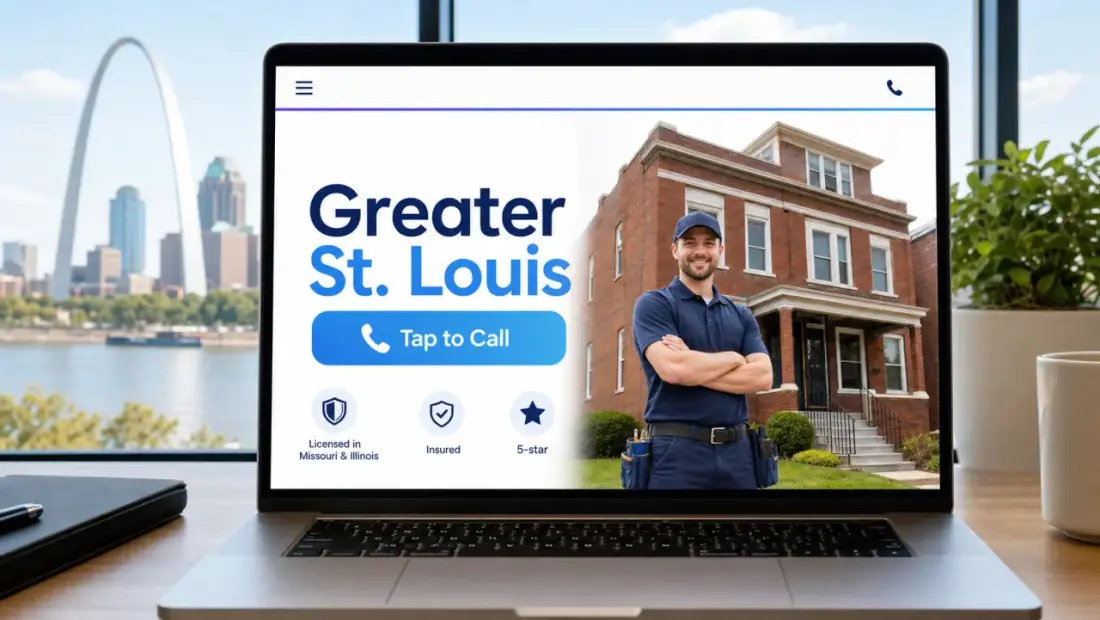
A real website hero is a clear headline, a short value statement, and a big “Call Now” button. A social media page is a banner image, a profile photo, a wall of posts, and an “About” section nobody clicks. There’s no service grid. No dedicated pricing pages. No long-form trust copy. No real ability to control what the customer sees first.

For browsing customers, that’s confusing. They came looking for “does this business solve my problem?” and got a feed of last week’s posts about a holiday weekend.

You can’t take it with you

Reviews on a social media page generally can’t be exported as a usable asset elsewhere. Your follower list isn’t yours — you can’t email them. Posts can’t be migrated to a different platform. If the platform restricts your account, raises prices for businesses, or kills a feature, everything you’ve built lives or dies on their decision.

A real website is the opposite: the domain is yours, the content is yours, the reviews can be syndicated, the leads come to your inbox. You’ve built equity in something you actually own.

Use both — but not as substitutes

Social media can be a great complement to a real website. Use it for community, before/after photos, customer engagement, local awareness. But the website is the central hub: where Google sends traffic, where leads convert, where your business’s long-term presence lives. Pointing social visitors to the website (and vice versa) is the right loop. Trying to replace the website with a social page is what costs you.

Want a website that actually does this?

$100 to build. $25/month to keep it running. No contracts, free homepage mockup before you pay a cent.

Get My Free Homepage Mockup

Get a Website That Puts All of This to Work

$100 build. $25/month maintenance. Free homepage mockup. No contracts.

Get a Free Homepage Mockup