Most small-business websites are brochure sites — digital business cards. They list the services, show some photos, share the phone number, and call it a day. The website exists, technically. It just doesn’t do anything. A growth site is a different category of asset: one that’s actively built to attract traffic, convert visitors, and compound value over time. The two cost roughly the same to build. The difference between them, year over year, is enormous.
What a brochure site does
A brochure site treats the website as a static document. It’s the digital equivalent of a printed flyer. It exists so that customers who already know your business name can find your phone number. The implicit assumption: leads come from elsewhere — referrals, trucks, ads — and the website’s only job is to confirm you exist when someone Googles you.
The site sits unchanged for years. No new content, no SEO work, no conversion tuning, no analytics. It costs almost nothing to maintain. It also produces almost no leads on its own.
What a growth site does
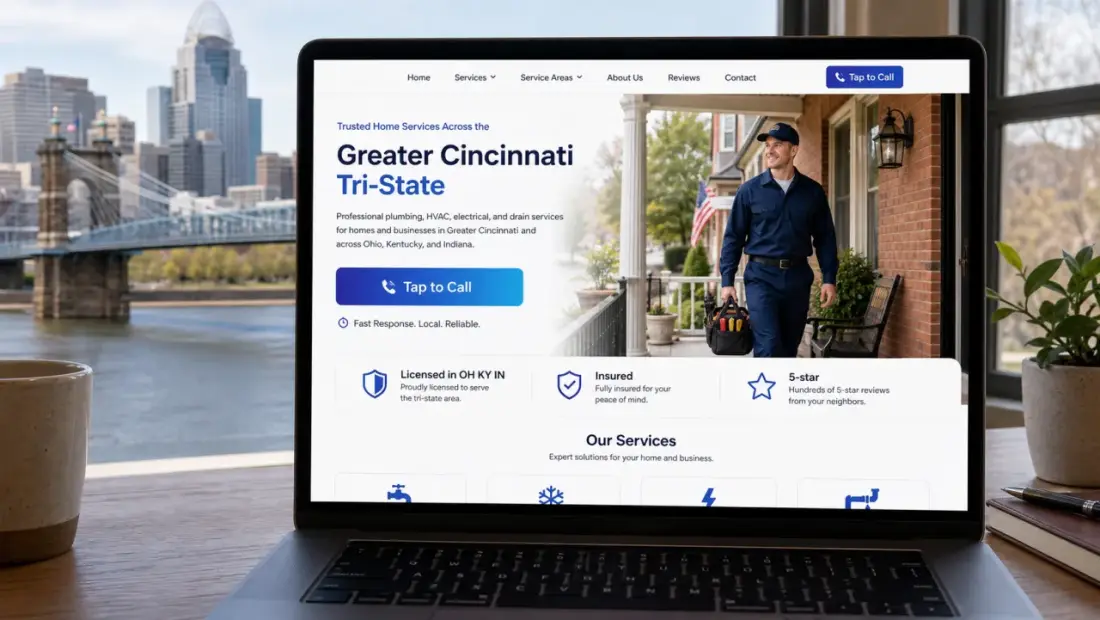
A growth site is built to generate leads, not just confirm existence. The structure is different from day one:
• Real local SEO baked in — schema, service-area pages, fast load, clean URLs.
• A conversion-tuned homepage with multiple CTAs and a sticky mobile call button.
• Separate, deeply-built service pages for each thing you offer.
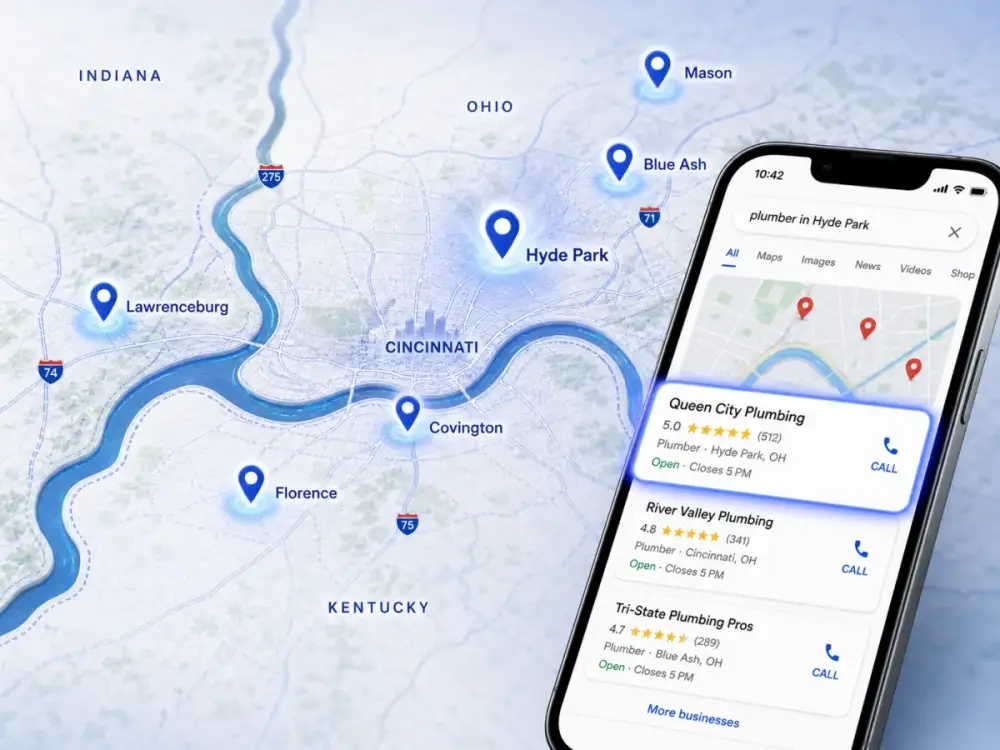
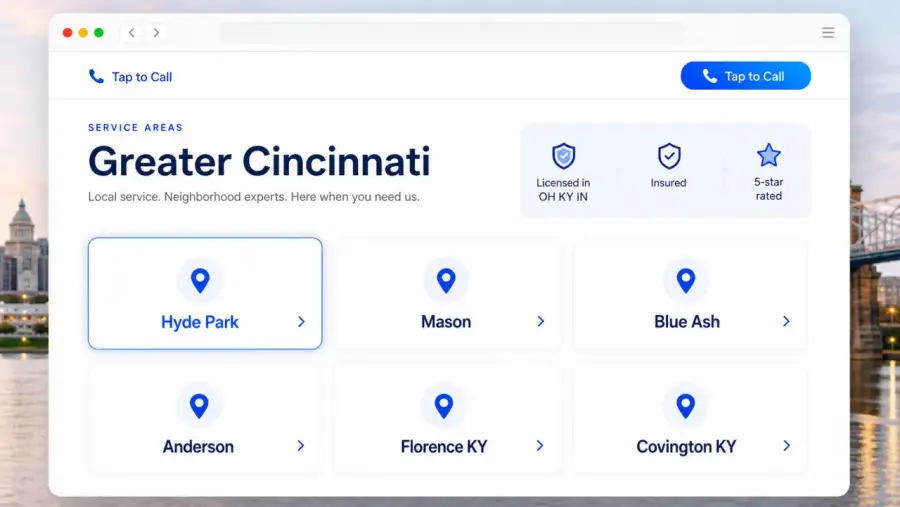
• City-specific pages for each town you serve.
• Real reviews syndicated from Google, refreshed automatically.
• Analytics tied in so you can see what’s actually working.
• A maintenance and content plan that adds depth over time — new service pages, refreshed photos, new neighborhoods, new FAQs.
The site is a customer-acquisition channel, not a digital business card. The first month it might bring in a handful of leads. By month twelve, with steady SEO and content work, it’s often the largest single source of new business.
The cost difference is smaller than people think
Brochure sites and growth sites cost about the same to build initially. The real difference is what happens after launch. A brochure site sits idle. A growth site has someone (in-house or contracted) doing the ongoing work — adding content, monitoring rankings, tuning conversions, refreshing photos, watching analytics, fixing what stops working. That ongoing work is what creates the compounding effect.
The math usually breaks like this: a brochure site is “cheaper” on paper but generates few leads. A growth site costs slightly more per month but generates leads worth dramatically more than the difference. After a year, the growth site is paying for itself many times over while the brochure site is still costing money for nothing.
How to tell which one you have
Some honest questions:
• In the last 90 days, has any new content been added to your site?
• Do you know which pages get the most traffic?
• Do you know how many leads came from the site last month, vs. from referrals or ads?
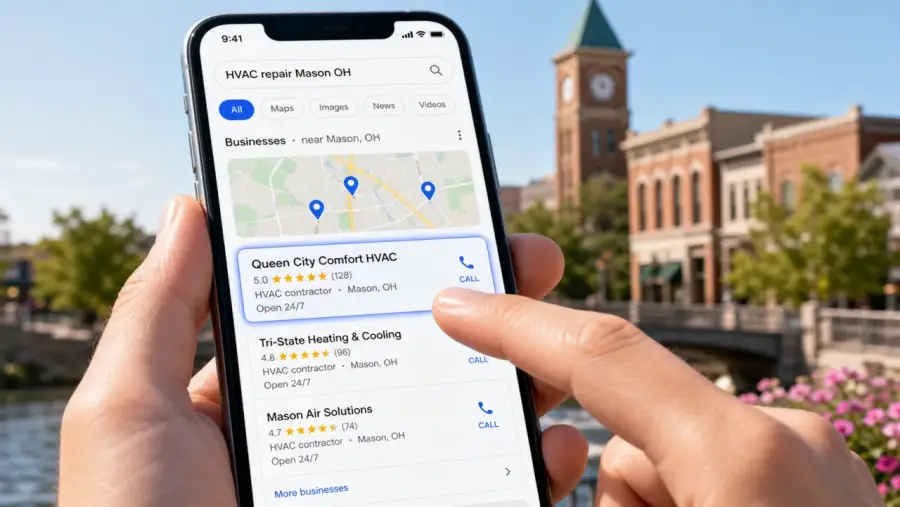
• If you searched “[your service] [your city]” on Google right now, would your site appear in the map pack? On page 1?
• Is anyone actively maintaining the site, or has it been static for a year or more?
If the answer to most of those is “no” or “not sure,” you have a brochure site. That’s fine for some businesses — but it’s a missed opportunity for any service business in a competitive market.
The shift is mostly mindset
Going from brochure to growth doesn’t require starting over. It usually means: getting the technical foundations right (SEO, schema, speed), building out the missing service and location pages, adding real reviews, tuning the conversion structure, and committing to an ongoing rhythm of small improvements rather than a one-time launch and walk away. The website becomes an asset that grows in value year after year, instead of a static expense that depreciates.
Want a website that actually does this?
$100 to build. $25/month to keep it running. No contracts, free homepage mockup before you pay a cent.
Get My Free Homepage Mockup