A new visitor lands on your homepage with no patience. They didn’t come because they like you — they came because Google sent them, and they have two or three other tabs open with your competitors. Within roughly five seconds, they decide whether to keep reading or hit back. They aren’t consciously evaluating you. They’re reacting to a handful of small visual cues that, together, signal “legit” or “sketchy.” If you don’t know what those cues are, you can’t fix the ones working against you.
Cue 1 — Does the page load instantly?
The very first signal is speed, before any visual element has even rendered. If a page takes more than two or three seconds to start showing content, the visitor’s patience clock has already started ticking against you. Anything past 4-5 seconds and a real percentage of visitors are gone before they’ve seen anything at all.
Cue 2 — Can they tell what you do, immediately?
Within a second of the page rendering, they’re scanning for a single answer: what business is this and what do they do? If your homepage opens with “Welcome to our website” or a slogan that doesn’t name the service, they’re working too hard. The hero of a service-business homepage should clearly say what you do (“Emergency plumbing in [City]”) and where you do it. Cleverness loses to clarity every time.
Cue 3 — Does the site feel current?
Visitors are surprisingly good at clocking an outdated site without being able to tell you why. The fonts feel wrong. The shadows on the buttons look like 2012. The hero image is a stock photo they’ve seen before. The contact info is in a weird place. Each cue is small, but stacked together they whisper “this business may not be active anymore.” If a customer thinks you went out of business, they’re not going to call to check.
Cue 4 — Is there proof?
Eyes scan for star ratings, real customer names, recognizable trust badges (industry accreditations, manufacturer certifications, awards), and photos that look like they were taken at your actual job sites. Stock photos hurt you here — modern customers can usually spot them within a glance, and a stock crew of smiling tradespeople reads as “this might not even be a real local business.”
Cue 5 — Can they take action without thinking?
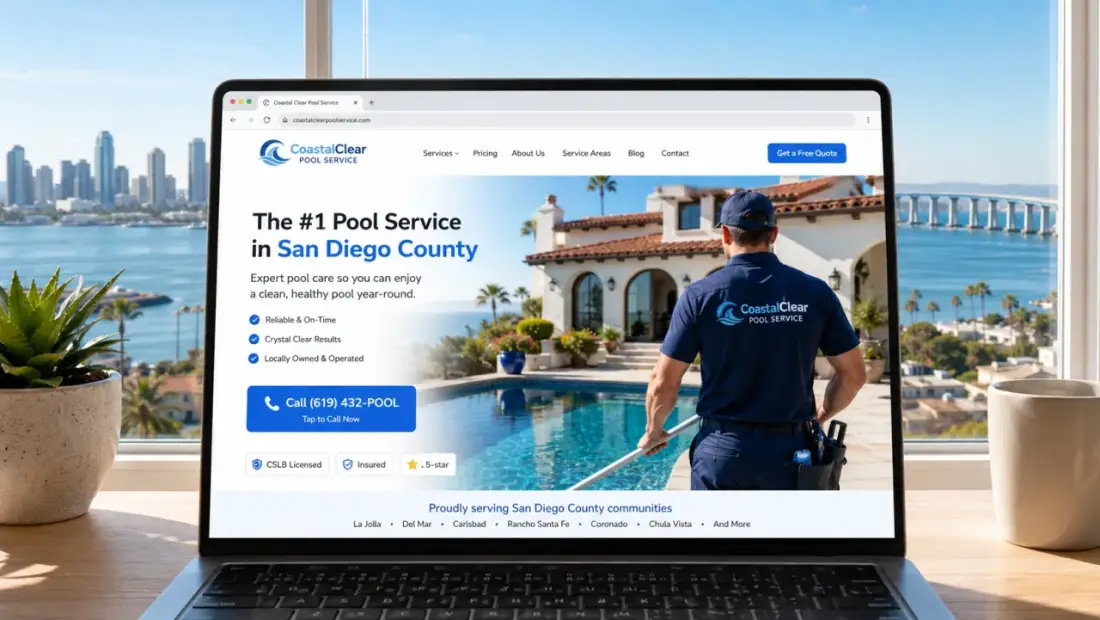
Is the phone number visible at the top of the screen? Is there a clearly labeled “Call” or “Get a Quote” button? On a phone, can they tap it without scrolling? When the visitor decides “OK, I’ll go with these guys,” the next move has to be one tap away. If they have to hunt for the contact info, half of them give up before they finish hunting.
How the five cues stack
Any one of these problems on its own won’t kill you. But they don’t arrive alone. A slow site usually has stock photos, an unclear hero, and a hidden phone number. The combined message to the customer is: this business doesn’t care, so I won’t either. Fixing them isn’t about flashy design — it’s about removing every reason a stranger has to leave in the first five seconds.
Want a website that actually does this?
$100 to build. $25/month to keep it running. No contracts, free homepage mockup before you pay a cent.
Get My Free Homepage Mockup